How to organize a casual backyard ring toss game
· Editorial team newsfromatlanta24.com
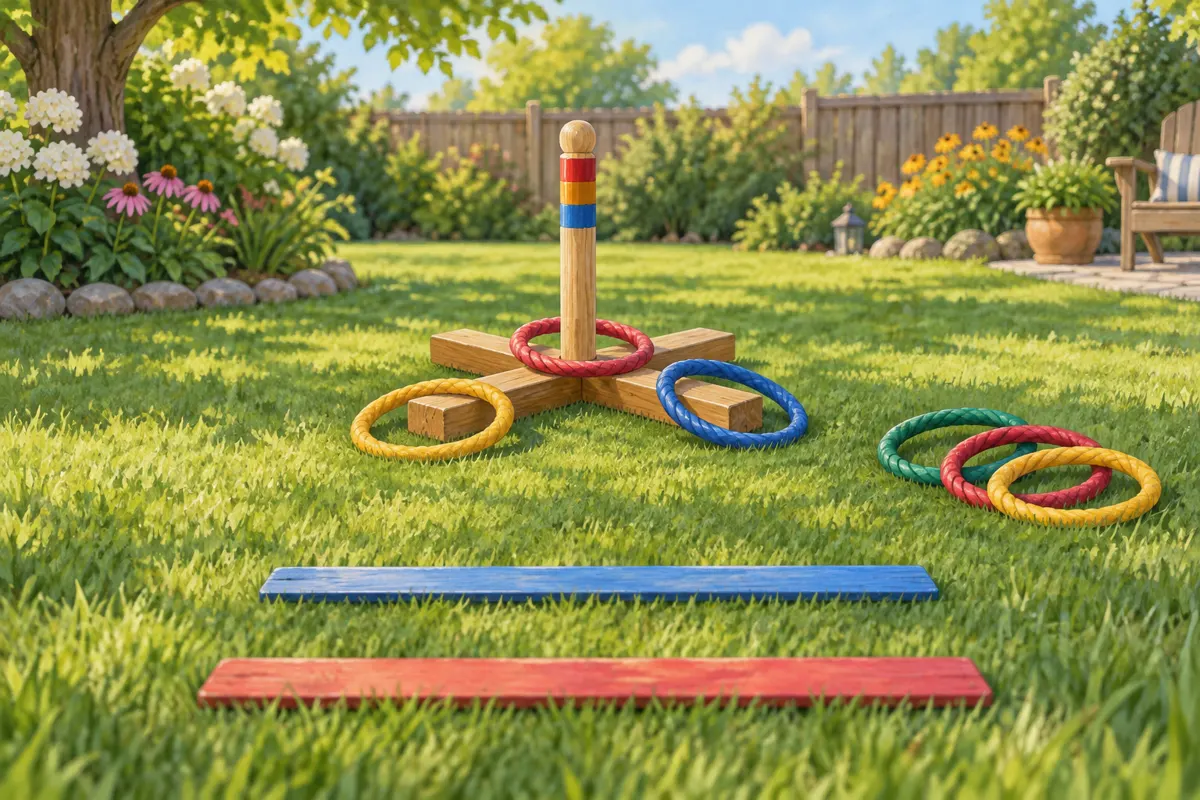
Set up backyard ring toss by placing a stable target on a clear, level patch, marking a throwing line, and agreeing on scoring before anyone starts. For mixed experience levels, add a closer line and give everyone the same number of throws. The proposed setup below keeps preparation simple and lets you adjust the challenge after a practice round.
Choose a clear patch with room to play
Start by looking at the space you have: its slope, surface, light, and nearby walking routes. Garden Design recommends evaluating these features and separating areas by function when planning a backyard. For ring toss, use that approach to give the throwing lane its own space, away from seating and routes to the house.
Choose somewhere players can stand comfortably and see the targets clearly. Leave room around and behind the target for missed rings and retrieval. Keep the lane away from windows, grills, fragile plants, and places where people or pets regularly pass through.
- Move chairs, toys, hoses, and loose objects out of the playing area.
- Check for holes, exposed roots, and slippery patches.
- Place the waiting area beside or behind the thrower.
- Keep a clear walking route around the game.
Arrange stable targets and gather the rings
Use a ring toss set with its matching rings and follow its assembly instructions. Check that the base sits securely and that the pegs are firmly attached. If the target wobbles, move it to a flatter spot before playing.
Proposed layout: use one target station, with all players throwing toward it from the same direction. If you have separate targets, arrange them in a short row with enough space to identify which peg a ring surrounds. Start with equal points for every peg so players can concentrate on throwing.
- A stable target and matching rings.
- Flat markers for the throwing lines.
- Paper and a pencil if you want to keep score.
- A container beside the waiting area for spare rings.
Mark throwing lines after a practice round
The throwing distance can be a house choice for this casual game. Pick an initial position, let everyone try a few throws, and adjust it before scoring begins. Aim for a distance where landing a ring feels possible but still takes some care.
- Place a flat marker where the first player will stand.
- Give each person the same short practice turn using the same rings.
- Move the marker closer if players are struggling to reach the target.
- Add a closer line for anyone who wants an easier throw and an optional farther line for a greater challenge.
- Agree on each player’s line before the scored game starts.
Use chalk on a suitable hard surface or flat markers that stay put on grass. Keep markers out of walking routes. Let players choose the closer line without making it a penalty; different starting positions can help a mixed group enjoy the same game.
Agree on simple scoring and turn order
Explain the rules once, then keep them consistent. Proposed house rules: each player throws three rings per turn, and each ring that finishes around a peg earns one point. A ring touching a peg without surrounding it earns no points. Count rings where they settle, including a ring that bounces onto a peg.
- Keep feet behind the chosen line until the ring is released.
- Leave rings in place until all three throws are finished.
- Count the score together before collecting the rings.
- Play five rounds, giving every player five turns.
- Allow a shared win if the final scores are tied.
For teams, alternate turns between sides and give everyone an equal number of throws. Keep a simple running total. A fixed number of rounds makes it easy to finish a game before a meal or another activity.
Keep play moving and adjust between games
Have one person throw at a time. Retrieve rings only after that player finishes, and pause whenever someone enters the lane. Return the rings to the next player before restarting. This routine gives everyone a clear signal for when to throw and when to collect.
Between games, ask whether the distance felt comfortable and the turns felt fair. Proposed adjustments include moving a line, shortening the next game, or playing cooperatively toward a shared score. Change one thing at a time and explain it before restarting. Pack away rings, targets, and markers when play ends so the yard is clear again.