How to set up a reusable takeout kit you’ll actually remember
· Editorial team newsfromatlanta24.com
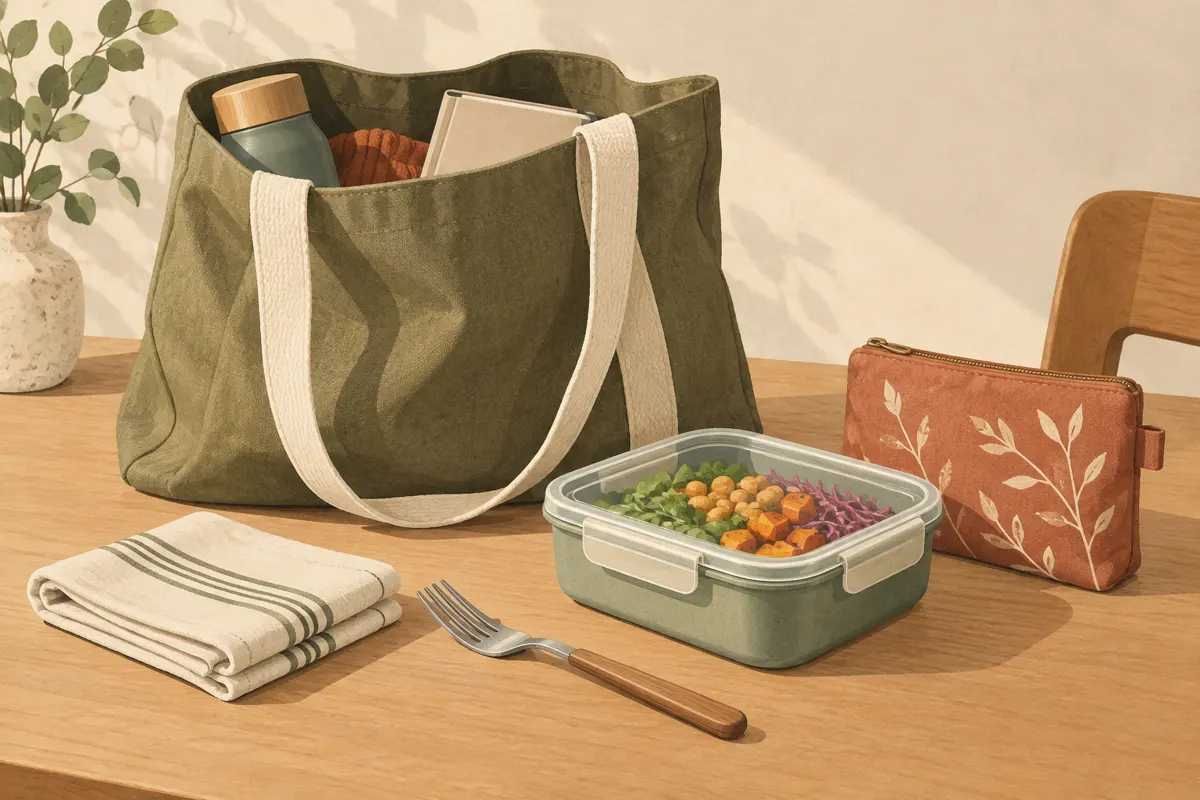
Start with the reusable items your usual meals require, keep them in the bag you already carry, and repack them after washing. A fork and napkin may be enough; add a container or cup when you have a regular use for it. The proposed routine below keeps the kit small and gives every item a clear place between meals.
Choose items for the meals you actually eat
Think through your last few meals away from home. Did you need utensils for a lunch bowl, a cup for coffee, or a container for restaurant leftovers? Build around those repeated situations. Check your kitchen first: an existing fork, washable napkin, and suitable food container can form your starter kit.
- For desk lunches: pack the utensil you normally use and a washable napkin.
- For regular drink stops: add a reusable cup if the business accepts it.
- For leftovers or meals packed directly into your container: bring a food container with its matching lid.
- For carrying everything: use a small washable pouch or a dedicated bag pocket.
Leave occasional extras at home until you find yourself needing them repeatedly. A full cutlery set, several containers, and multiple cups create more to carry and wash. Choose a container that fits both your typical portion and the space available in your bag.
Check how the restaurant handles reusables
Ask before ordering whether the business accepts customer-owned cups or food containers, and how it wants you to present them. Metro’s bring-your-own guidance describes customers bringing clean reusable containers to participating businesses. That Oregon guidance does not establish what an Atlanta restaurant accepts, so check with each place you use.
A simple question is enough: “Can you pack my order in this clean container?” For advance orders, ask before the meal is packaged. If the business cannot accommodate your container, you can still use your own utensils and decline disposable cutlery when ordering.
Some businesses offer borrowed containers instead. Those systems have their own return procedures: Cornell’s program takes containers back for cleaning, while Recirclable asks users to rinse and return borrowed bowls. Follow the particular program’s instructions and return deadline rather than treating a borrowed bowl as part of your permanent kit.
Give the kit a place beside your essentials
Choose one home for the clean kit. If you commute with the same backpack or tote, reserve a pocket for it. If you switch bags, keep the pouch beside your keys or work badge and move it with those essentials. Avoid storing it in a cupboard you rarely open before leaving.
Connect packing to a departure check you already make. When you check for your wallet, check for the pouch too. On days when you expect takeout, add the larger container at the same time. This lets you carry a small everyday kit without hauling every item on every trip.
Make washing and repacking one routine
Give used items a clear route back into circulation. A separate washable bag can keep used utensils and napkins apart from clean belongings on the trip home. Empty the kit when you unpack your lunch bag or arrive home, so yesterday’s items do not stay hidden until your next meal.
- Remove leftovers and food residue, then wash the container and utensils according to their care instructions.
- Put the used napkin in the laundry and clean its pouch when needed.
- Let washed items dry before returning them to the pouch.
- Pair the container with its lid and place the complete kit back in its usual departure spot.
Check each item’s instructions before using a dishwasher or microwave. Keep one clean replacement napkin available if laundry timing regularly leaves the kit incomplete. Add further duplicates only when a specific washing gap keeps interrupting the routine.
Adjust the kit when something keeps getting skipped
After several outings, look at what you carried, used, and left behind. Remove items that stayed untouched. If the container kept being forgotten because it would not fit, try a smaller one you already own or carry it only on planned takeout days.
Treat a missed day as a practical clue. A kit left drying needs an earlier washing time; a pouch stranded in another bag needs a consistent transfer spot. Change that one step, then keep using the items that earn their place.